



New
React, Don’t Predict
I’m writing this for the version of you at 2 a.m., account bleeding red, quietly wondering whether you’re cut out for this at all. React, don’t predict — that’s the line that saved me, and the heart of it is a trading plan you write before you ever touch the mouse. Let me tell you why.
The night my cursor drifted Buy, Sell, Buy — and I realized I wasn’t trading, I was betting
Two in the morning. The screen threw its cold blue light across my face. The coffee by my hand had gone stone cold, a thin skin forming on top. My cursor kept drifting — over Buy, then Sell, then Buy again. A red XAUUSD candle had just hit me square in the chest. I heard my own voice whisper in the dark: “It has to reverse this time.”
Do you see yourself in that scene?
If you do, I’m not here to judge. I sat in that exact chair. And that night a cold truth crawled up my spine: I wasn’t trading. I was betting. I wasn’t asking what my plan was — only what the market was thinking.
Behind that trembling cursor were three fears I used to hide, the same ones you hide: losing money that was maybe a whole month of sweat; the fear that “I just don’t have what it takes”; and the quietest, most corrosive one, “It’s too late for me.” Hear me on this: you’re not stupid. You’re just playing the wrong game.
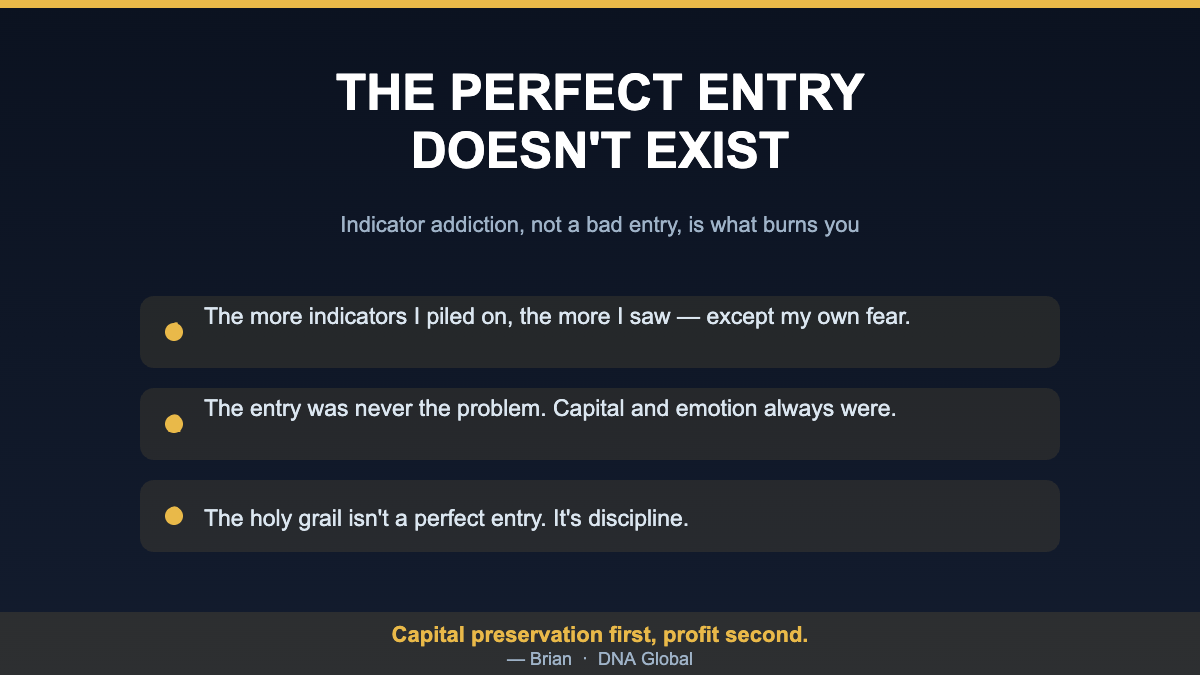
I spent night after night guessing tops and bottoms on gold. And I lost — in real money, in real sleepless nights. It took me too long to absorb the lesson: the entry was never the problem. Capital and emotion always were. It’s like learning to swim. The more you fear sinking, the more you thrash; the more you thrash, the faster you sink. You aren’t short on strength — no one taught you to hold your form and breathe on rhythm.
A trade you can’t write a reason for on paper isn’t a trade — it’s a bet placed against your own emotions.
So tonight I’ll ask you for one thing. Don’t click an order you can’t write the reason for. One line is enough. If you can’t write it, it isn’t a trade yet. It’s a gamble.
The turning point: how to make a trading plan
The next morning, I didn’t open the price ladder. I opened a blank page. For the first time in months, I stopped asking the market its old question — “Where is price headed?” I asked myself a different one: “If price goes here, what will I do?”
That was the whole turning point. Not a new indicator. A new question.
So how do you make a trading plan? Plainly: it’s something you write by hand, before you enter, locking down four things. Entry — which conditions have to appear before you click. Exit — where you cut the loss, where you take profit. Risk — how much this trade is allowed to cost you. And the if-then — what you do if it goes your way, against you, or sideways.
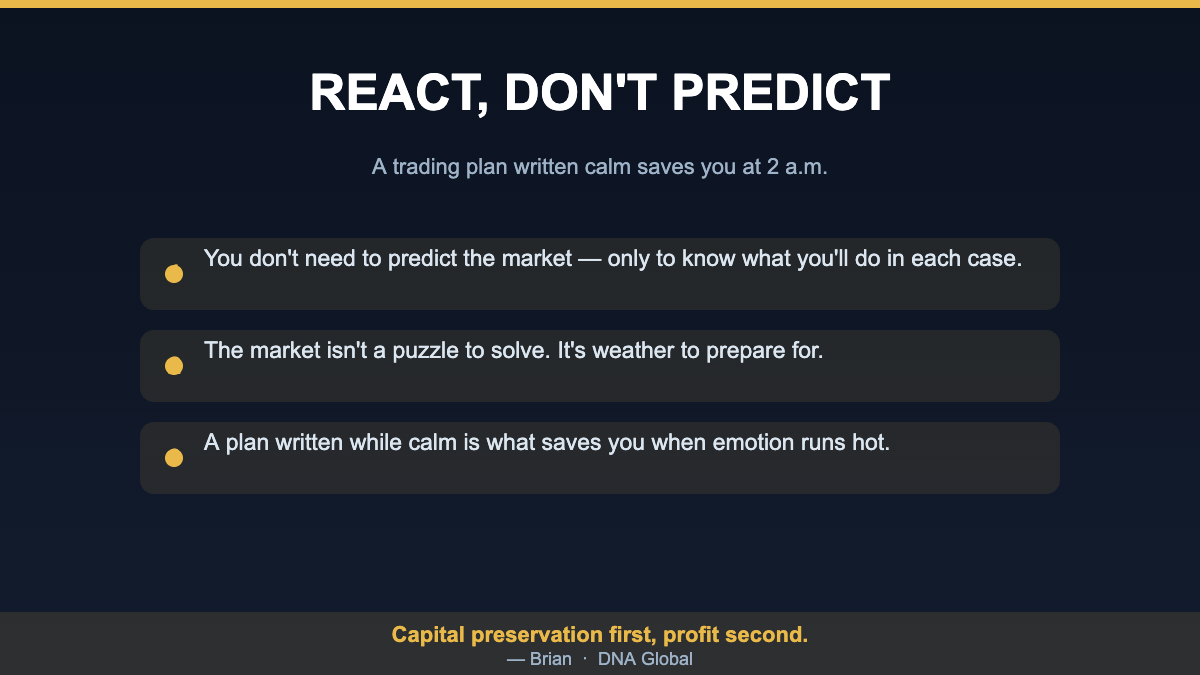
That’s it. No secret formula. But the most important part isn’t in those four lines — it’s in the timing of when you write them. The plan has to be written while your head is cool, while not a single dollar is running, while your heart beats at its normal pace. The calm version of you is far wiser than the panicked one at 2 a.m. You write it calm to save yourself when you’re frantic.
Nobody runs all 42 kilometers on inspiration. You run the pace you set at the starting line. That quiet pace sheet — not your legs — carries you home when your body screams to stop. You don’t need to guess the market right. You only need to know, in advance, what you’ll do — then do exactly what you wrote.
What “react, don’t predict” really means: stop being a fortune teller
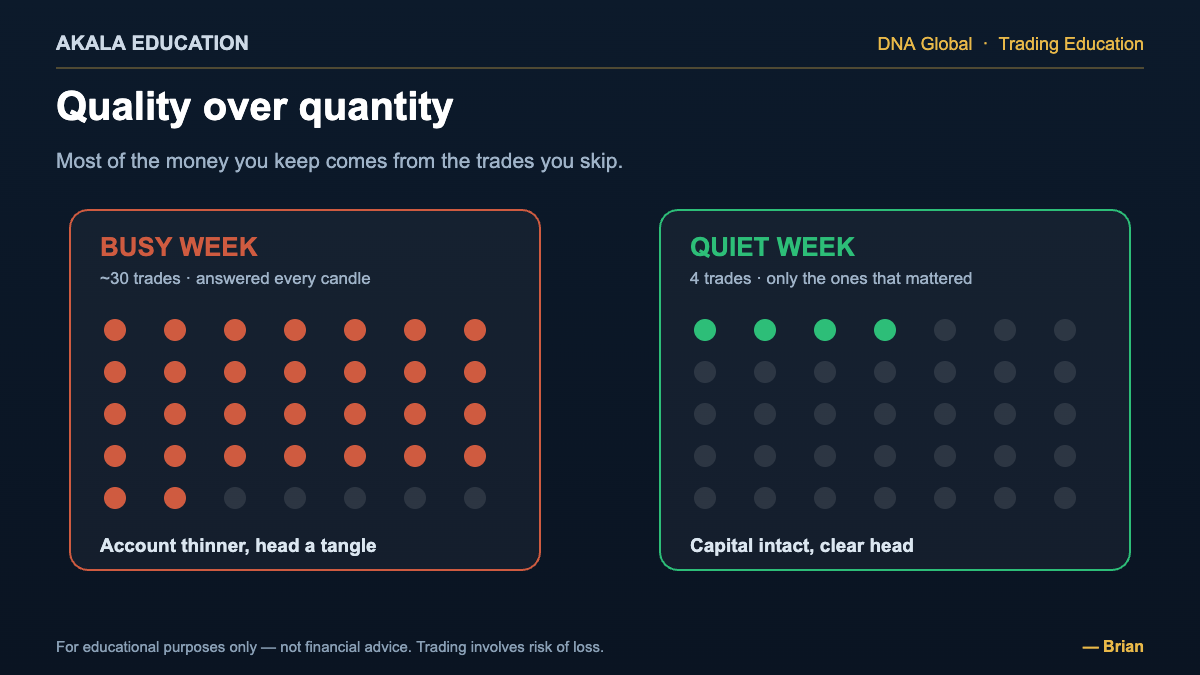
There was a stretch where I had twelve chart tabs open at once — news, indicators, Elliott waves, a tangle of Fibonacci lines. I’d sit there, eyes straining, trying to see through the screen to whether the next candle would be green or red. Like a fortune teller casting bones. And I lost. Steadily, faithfully.
Guessing how high the next wave will run is a hopeless errand. However good you are, the market doesn’t ask your opinion or request permission to reverse. I once stood in the sea trying to hold back each wave by hand — and the harder I gripped, the more I drowned.
Then I changed the question. Not “where will price go,” but “if price moves this way I do this, if it moves that way I do that.” That is react, don’t predict — respond according to a plan set in advance, instead of guessing what no one can guess.
Here’s the strange part: when I switched to reacting, I didn’t suddenly win more. What changed first was that I stopped shaking — my hands stopped going cold when price moved against me, because I already knew what I’d do.
Flip it around: the market isn’t a puzzle to solve, it’s weather to prepare for. You don’t guess whether tomorrow brings rain or sun before you step outside — you carry a raincoat. The fortune teller predicts the sky. The engineer only asks: if it rains, then what; if it shines, then what.
And don’t misread this. React, don’t predict isn’t switching off your thinking — it’s pouring all your thinking into the moment you write the plan, so that when the market opens, you simply execute. Reopen your most recent trade tonight and give it an honest label: did you “predict,” or did you “react”?
What goes into a trading plan: four parts you write before you enter
I used to think a trading plan was something lofty — dozens of indicators, three monitors, a system so tangled you had to be brilliant to follow it. Turns out, no. A decent plan is four answers, written before your finger touches Buy — while your head is cold, not while your heart is hammering.
One — Where do I enter? Not “when I feel like it,” but: which specific condition has to appear before I’m allowed to click. Write it down. No condition, no trade.
Two — Where do I exit? Both directions. Where the stop loss sits, where the take profit sits — set before you enter. Because once price is running, the one making decisions is no longer you. It’s your emotions.
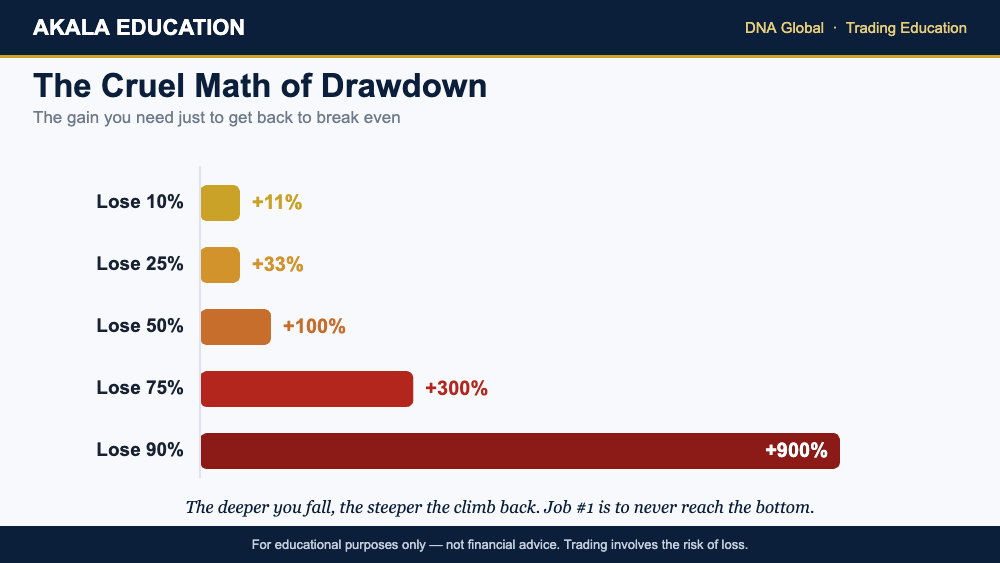
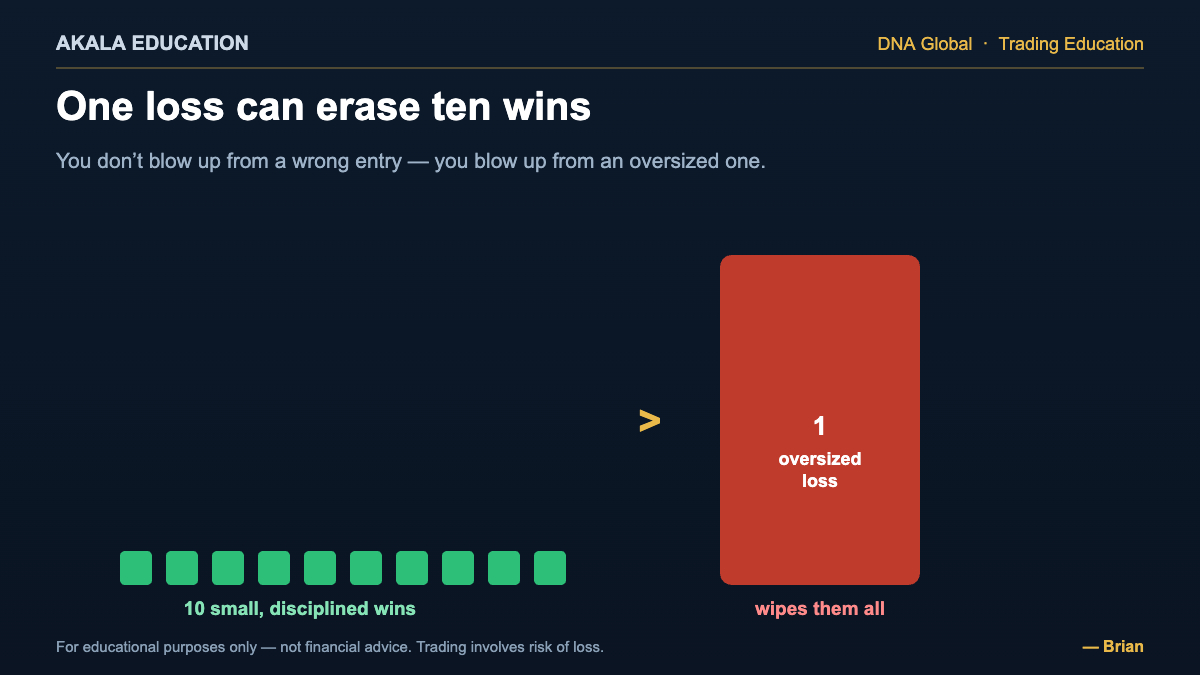
Three — How much do I lose before I stop? What percentage of capital am I willing to lose on this trade? Locked in advance. Preserve capital first, profit later.
Four — If-then? Price goes against me, goes my way, drifts sideways: one answer per scenario, written ahead — so when the market asks, you don’t have to think.
Notice — none of the four are hard because they’re complex. They’re hard because of timing. A plan doesn’t need to be sophisticated; it needs to be written while you’re still sober. Because a trading plan, in the end, is the note your calm self leaves for the panicked one inside you. Write it kindly.
(One line of honesty: no framework here guarantees you win — Forex and XAUUSD always carry the risk of losing capital. This is a way of thinking, not a promise.)
The real enemy isn’t the market — it’s the impatient version of you
So you’ve written the four lines. You think the hard part is done. It isn’t.
The hardest part isn’t writing the plan — anyone can do that in ten cool-headed minutes. The hard part is not tearing it up.
I’ve had beautiful plans — entry, exit, maximum loss, tidy bullet points. Then price would creep toward the stop. Heart racing, palms wet. And the familiar voice would whisper: “Just nudge the stop down a little, give it room to breathe.” I’d nudge it. Then add a trade that wasn’t in the plan, dressed up as “averaging back in.” I paid for exactly that moment. Many times. Enough to learn something I didn’t want to admit.
I didn’t lose to the market. I lost because I couldn’t sit still.
Listen closely: you break the plan not because the market changed direction — you break it because you can’t stand the feeling of waiting. The stop you set with a cool head wasn’t wrong. The panicking part of you just isn’t patient enough to respect the part that calculated cold.
And that’s where it broke open for me: you don’t beat the market. You beat the hasty version of yourself. The candle isn’t your opponent. Your opponent is sitting in your chair.
So what do you beat it with? By nailing the decision down before your heart speeds up. The pending order placed in advance. The stop entered at the same moment as the entry, not “figured out later.” Once the rules are sitting there, the impulse has no room to squeeze in. You don’t have to win against emotion mid-surge — you just have to act before it surges.
But one more honest thing. Alone, at 2 a.m., holding your hand still is very hard. If you’ve ever failed to, that doesn’t mean you’re weak — it means you’re human. It’s the same truth I wrote about in The Hardest Click Is the Stop Loss. That’s why I don’t believe in the hero at the keyboard, not even me. What holds your hand still at your weakest isn’t solitary willpower — it’s a system, and people training alongside you who see you and ask the right question at the right moment. Alone you go fast. Together you go far. I choose to go far.
What to do tonight: write your trading plan — and don’t go alone
Open the notes app on your phone. Write four lines: where I enter, where I exit, how much I accept losing, and what I’ll do if price goes against me. Four lines, written while your head is cold — not while your hand is shaking, watching a red candle swallow your account. Then do exactly what you wrote. That part is the hard one.
It sounds so simple you’ll be tempted to dismiss it. But those four lines are a dividing line: on one side, the person typing orders to the beat of their heart; on the other, the person typing orders to a plan.
You don’t need to know how high the next wave will run. Long-distance swimmers don’t guess the swell — they hold form, breathe on rhythm, trust the stroke they trained. The market is the water. Your job isn’t to beat it, but to keep your shape inside it.
Don’t predict the market — write the plan first, then have the nerve to do exactly what you wrote.
And if you keep writing the plan and then breaking it — moving the stop, taking trades that aren’t in it — let me say it straight: what you’re missing isn’t knowledge. You already know what you should do. What you’re missing is someone beside you in the hardest moment, so you don’t break the plan alone. At DNA Global, we don’t sell magic entries. We sit beside each other and hold the line on discipline. If you’re tired of going alone, come find me.
React, don’t predict. Write the plan while you’re calm — and trust it when you’re not.
Trading Forex/XAUUSD always carries the risk of losing capital; everything here is shared experience and education, not investment advice — your capital is your responsibility.
— Brian
FAQ
What is a trading plan?
It’s deciding in advance — while your head is still cool — where you enter, where you exit, the maximum you’ll lose, and your if-then for each situation. It isn’t a lucky charm; it won’t win you every trade. It stays your hand at the exact moment you’re weakest. A plan doesn’t erase risk — it forces risk to have a limit.
What does “react, don’t predict” mean?
Stop being a fortune teller, start being a gatekeeper. You don’t guess where price goes — you write down ahead of time what you’ll do when it moves each way. Think once, when you write the plan. While the trade runs, you only execute. It’s not that you’re smarter than the market — it’s that you prepared better than the version of you from yesterday.
How should a beginner start?
Stop hunting for a holy grail. Before your next trade, write four lines on paper: entry, exit, risk, if-then. Clumsy is fine. Small capital, small expectations — preserve capital first, profit later.
Do I really need a trading plan for XAUUSD?
More than ever. Gold moves fast, but your emotions move faster. Without a plan in the middle of that surge, you aren’t trading — you’re placing a bet and calling it investing.
About the author — Brian, founder of DNA Global. I built DNA Global, a training community for Forex/XAUUSD traders. I once believed the right entry would change my life, then I lost, then I paid the tuition the market charges — and chose to build a system instead of playing the keyboard hero. Away from the screen, I run marathons and I swim: the same lesson about holding your form and breathing on rhythm. I won’t promise you’ll win — I’ll only tell you what helped me survive long enough to learn.
Trading Forex/XAUUSD carries the risk of losing capital. This article is educational and reflects personal experience; it is not investment advice.